Tag Archive | "Libya"

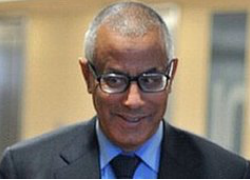
Saif el-Islam al-Gadhafi

News Post: Which Court Should Try Seif-al-Islam el-Qaddafi?

By: Brandi Joffrion

Saif el-Islam al-Gadhafi

Saif el-Islam al-Gadhafi

Libyan rebels captured Seif al-Islam el-Qaddafi, Moammar Gadhafi’s son, this past Saturday.  Within hours after his capture, the International Criminal Court’s (“ICC”) prosecutor, Luis Moreno-Ocampo, announced that he would be traveling to Libya becaus Seif-al-Islam is wanted by the ICC for charges of crimes against humanity.  However, Libya is not a member of the ICC Rome Statute, and it is arguable that Libya may not have an obligation under the U.N. Security Council Resolution 1970 to cooperate with the ICC’s regulations.  If Libya were to cooperate, it would have to hand over Seif-al-Islam or, at the very least, recognize that Libya is within the ICC’s jurisdiction to determine whether Seif-al-Islam can, and should, be tried in Libya’s domestic courts.

The rebels from the town of Zintan, who captured Seif-al-Islam, and the unelected interim government of Libya want him tried in Libya, where he would face the death penalty.  This is assuming, of course, that he is not murdered before trial, as occurred to his father.  The ICC, on the other hand, forbids capital punishment and would therefore not seek the death penalty against Seif-al-Islam.  Additionally, concerns have been raised that if Seif-al-Islam is not tried in Libya, Libyan citizens would be denied due justice.

Despite these concerns, it is argued that Seif-al-Islam should be tried in the ICC in order to prevent a repeat of the depraved proceedings that were brought against the Iraqi leaders.  In those cases, the leaders never received due process since they were never tried for their crimes of genocide due to the United States’ insistence that Saddam receive the death penalty.  According to the ICC’s statute, a sovereign nation is to be given priority to try its own citizens and the ICC is only to act as a court of last resort in the instance that the local justice system is in a state of “substantial collapse” or unable to operate in an impartial manner.  Currently, Libya has no working court system that will satisfy international standards and it plans to enforce the death penalty without regard to ICC standards.  Moreover, the Libyan people have demonstrated their willingness to take justice into their own hands without resorting to the justice system, as exemplified through Gadhafi’s death last month at the whim of his captors.

However, Libyan citizens could acquire justice through the ICC if it were to try Seif-al-Islam.  It is mandated that all ICC trials be televised, and either part or all of Seif-al-Islam’s trial proceedings could be held in Libya even if tried by the ICC.  Furthermore, it is possible to hold two trials: one trial in the ICC, in which the ICC would charge Seif-al-Islam with crimes against humanity, and a second trial in Libya’s domestic courts, in which Seif-al-Islam could be tried for a wider scope of crimes, which could include anything from corruption and abuse of state funds to murder and torture.

Trying Seif-al-Islam within the ICC would also set precedent for future Libyan officials who are in violation of international law and who are indicted for crimes against humanity.  As one of the “most serious crimes of concern to the international community as a whole,” it is argued that crimes against humanity should take precedence over any individual charges of murder or corruption that could be alleged within domestic courts.  In addition, the ICC provides for a fair and transparent process within the international criminal justice system by permitting the accused to raise defenses and summon witnesses, and by empanelling impartial judges, as well as requiring the heightened burden of proof  of proof beyond a reasonable doubt for any individual who may be convicted by the ICC.

Posted in DJILP Staff, TVFA PostsComments (0)

Libya and the Responsibility to Protect

The Death of R2P

Libya and the Responsibility to Protect

Libya and the Responsibility to Protect

A few weeks ago, Professor Ved Nanda posted on the significance of the Libya conflict for the concept of R2P. This entry takes issue with with Professor Nanda’s comment that “time will tell whether NATO by overstepping its mandate in Libya may have damaged the concept”, and instead argues that R2P in its current form has been damaged beyond repair, never to be utilised again. This pessimistic observation is a direct consequence of the problems of intervention in Libya.

The recognition given to the concept of R2P in 2005 was, as Professor Nanda notes, a momentous achievement. The concept itself reworks in a more positive manner the approach of several jurists1 who advocated the idea of a qualified sovereignty in cases that demanded humanitarian intervention – an idea which understandably aroused great suspicion on the part of post-colonial nations and the developing world. R2P may have seemed a more palatable option due to the emphasis on the availability of intervention as a last resort (including a more structured process for encouraging compliance with human rights standards) as well as post conflict solutions. However, these elements, which formed a large part of the lengthy ICISS report,2 were left untouched in the World Summit Outcome Document. The relevant paragraphs3 were undoubtedly the product of a compromise in which R2P suffered in its association with the controversial, unilateral notion of humanitarian intervention. The clear focus of the delegates, therefore, was to restrict R2P to Security Council authorised action.

Although the UN Secretary General, acting through his Special Representative on R2P,4 has provided valuable guidance and elucidation of R2P,5 it is important to remember that this does not represent the state of international law on the subject. The report has not been endorsed by the General Assembly, indeed, the GA 6th (Legal) Committee remains divided on the proper scope of R2P and its use.

Authorisation of the use of force in an R2P scenario could be considered controversial, but it submitted that such action falls within the tendency of the Security Council to broaden its mandate since the early 1990′s. From this perspective, the affirmation of R2P in the World Summit Outcome Document is merely confirmation that the Security Council is permitted to view a wholly internal, R2P situation as a threat to international peace and security, thus allowing it to legitimately respond under Chapter VII. In UNSC Resolution 1973, it would appear that this is exactly what occurred. Whether NATO, in acting pursuant to that Resolution, has exceeded its mandate is a difficult question which will not be pursued here – but what is clear is that when a mandate is phrased in functional terms such as ‘protection of civilians’, the contours of that authorisation will prove controversial. The emphasis placed on authorisation rather than the content of R2P has lead to its destruction as a credible mechanism. In invoking an R2P concept that lacked clear agreed content, the door was opened to criticisms of mission creep. When such criticism comes from Permanent Members of the Security Council, it would appear that R2P in its current form was a one off magic bullet. It took great efforts to secure UNSC Resolution 1973 – efforts that will likely be in vain in future situations due to the Libyan experience and the negative reactions of P5 members.6

What, then, is the future of R2P? One solution would be to have a clearly defined concept which, when invoked, would leave less room for interpretative differences, at least in terms of the basic mission. This might then give the members of the Security Council renewed confidence to invoke it. However, the difficulties in agreeing anything in the 6th Committee, the lack of positive response to the Secretary General’s understanding of R2P, and the failure of the World Summit Outcome Document to adopt more than a few lines of the ICISS report indicate that such hopes may well be in vain.

The second solution, which might be favourable, is the development of regional arrangements which utilise the concept. Art 4(h) of the AU Constitution provides a prime example of such a position.7 However, it is also illustrative of the problems with this approach, in that the required approval was not given in the case of Libya, leading perhaps to the conclusion that regional arrangements might be more illusory than real. In addition, there remains the issue of whether such authorisation is compatible with the prohibition on the use of force, often invoked as a norm of ius cogens.8

The third, most realistic, and most undesirable option is that R2P will continue to be invoked on a unilateral or multilateral basis outside of the Security Council. The reaction of states to the NATO intervention in Kosovo suggests that such an approach is not permitted under international law, and their insistence on Security Council authorisation in the World Summit Outcome Document supports this view. In taking that step, states emphasised their worries about imperialist ambition and state supported regime change. The irony is that the Libyan campaign, the greatest success of R2P, is also its greatest failure. The scenarios which the contributors to the World Summit sought so hard to avoid have been made more likely by their unfinished and imperfect solution.

  1. See e.g. M Reisman and M McDougal, Humanitarian Intervention to protect the Ibos, in RB Lillich (ed.), Humanitarian Intervention and the United Nations, Charlottesville, 1973, p. 177.
  2. http://www.scribd.com/doc/52015826/Responsibility-to-Protect-Iciss-Report
  3. Paras 138, 139, at http://daccess-dds-ny.un.org/doc/UNDOC/GEN/N05/487/60/PDF/N0548760.pdf
  4. http://www.un.org/en/preventgenocide/adviser/index.shtml
  5. Principally in his report, Implementing the Responsibility to Protect at http://globalr2p.org/pdf/SGR2PEng.pdf
  6. The Chinese and Russian vetoes in respect of the ongoing situation in Syria might be illustrative of this stance, despite the fact that no military action has been proposed.
  7. http://www.au2002.gov.za/docs/key_oau/au_act.htm
  8. For a recent and I would argue, persuasive article to the effect that the prohibition on the use of force is not a norm of ius cogens, see Green, Questioning the Peremptory Status of the Prohibition of the Use of Force (2011) 32 Michigan Journal of International Law 215-255.

Posted in Richard Hoyle, TVFA PostsComments (3)

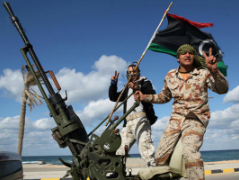
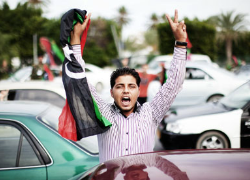
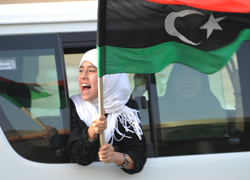
Libyans celebrate their freedom

Libya and the “Responsibility to Protect”

The recent uprisings which toppled Ben Ali in Tunisia and Mubarak in Egypt spread fast throughout the Middle East and North Africa.  They overtook Libya, as well.  Inspired by the revolutions in Tunisia and Egypt, protesters and demonstrators filled the streets in several Libyan cities.  Qaddafi called those opposing his brutally repressive regime, “cockroaches” and “rats” who did not deserve to live, and his bloodthirsty forces, including mercenaries, indiscriminately executed any suspected rebel.  The UN Security Council invoked for the first time ever the “Responsibility to Protect” (R2P), an emerging new norm of international law.

Condemning the violence and use of force by the Libyan government against civilians and welcoming the similar early condemnation by the Arab League, the African Union and the Secretary-General of the Organization of Islamic Conference, the UN Security Council adopted a resolution on February 26, 2011, demanding an immediate end to the violence, and urging the Libyan authorities to act “with the utmost restraint, respect human rights and international humanitarian law.”  It also decided to refer the situation to the International Criminal Court and imposed sanctions on Libya, including an arms embargo, a travel ban against 16 named Libyan government officials, including Qaddafi, his sons and daughter, and freezing the Qaddafi family assets.

Libyans celebrate their freedom

Libyans celebrate their freedom

As the Libyan situation worsened and Qaddafi continued his brutal oppression in defiance of the Security Council’s resolution, the Council adopted Resolution 1973 on March 17, 2011, authorizing member states “to take all necessary measures . . .  to protect civilians and civilian populated areas under threat of attack.”  It also established a no-fly zone and further strengthened the sanctions imposed in the earlier resolution.  Subsequently, on June 27, the International Criminal Court issued warrants of arrest for Qaddafi, one of his sons, and Libya’s intelligence chief, on charges of crimes against humanity (murder and persecution) committed through the state apparatus and security forces.  Since Libya is not a party to the Rome Statute that created the Court, it is subject to the ICC’s jurisdiction through the UN Security Council resolution.

Pursuant to the call in Resolution 1973 authorizing Member States “to take all necessary measures . . . to protect civilians,” NATO soon began its air campaign against Qaddafi’s forces.  The context was the imminent attack on Benghazi by Qaddafi’s forces and the feared resulting massacre.

After six months of NATO’s assistance to the rebels, the new NATO-backed and internationally recognized administration, the Libyan National Transitional Council (NTC), was established in Tripoli.  The United States and more than 80 countries have recognized the NTC as the legitimate government of Libya, which has also replaced the old Qaddafi regime at the UN.  The interim Libyan government has received part of Libya’s frozen assets and it is receiving political, technical and economic assistance toward the challenging task of rebuilding the country after 42 years of abuse under the Qaddafi regime.

The “responsibility to protect,” the new norm invoked against Libya, is a promising development.  It should be recalled that the international community was a silent observer witnessing the killing fields of Cambodia.  And the genocide in Rwanda, the Srebrenica massacre and other mass atrocities prompted then-Secretary-General Kofi Annan to seek effective measures for “swift and decisive action” to prevent genocidal actions and to mount an appropriate response.

The Canada-based International Commission on Intervention and State Sovereignty’s report, “Responsibility to Protect,” was the basis of subsequent discussions in the UN.  Eventually, in September 2005, the UN World Summit of Heads of State and Government adopted in its World Summit Outcome Document the core elements of R2P.  The basic element of the concept is that the state has the responsibility to protect its population from genocide, war crimes, ethnic cleansing, and crimes against humanity, as well as their incitement.  The world leaders added that when peaceful means are inadequate and national authorities are “manifestly failing” to protect their populations from these crimes, they are prepared to act collectively, “in a timely and decisive manner,” through the Security Council, in accordance with the Charter and on a case-by-case basis.

After 2005, the Security Council referred to the R2P concept in two resolutions prior to its action in Libya.  Ban Ki Moon, the current Secretary General, has outlined the three pillars of R2P: 1) the responsibility of the state to protect its population from these crimes; 2) international assistance and capacity building in states so that they can provide that protection; and 3) timely and decisive response when a state is “manifestly failing” to protect its population.  The General Assembly has been discussing the concept in order to explore effective means to operationalize it.

NATO’s action in Libya has come under scrutiny and criticism.  Its mandate to protect the civilian population in Libya has, critics assert, been stretched to changing the regime.  Why has R2P been invoked to support military action in Libya and not in Syria, they ask.  Time will tell whether NATO by overstepping its mandate in Libya may have damaged the concept.  In any event, much more needs to be done to ensure that the concept is operationalized by setting standards to determine when military action is appropriate.  R2P is a work in progress, but it is undeniable that the concept is a monumental step forward.

Posted in TVFA Posts, Ved NandaComments (0)

Source: the New York Times

News Post: Lessons learned from Libya

Source: the New York Times

Source: the New York Times

On March 28, 2011, President Obama laid out two principles for any U.S. action in Libya. The first is that America has the responsibility to stop “looming genocide” in Libya. The second is that when the safety of Americans is not directly threatened, but where action can be justified, America will act only on the condition that it is not acting alone.

When President Obama made this speech, he was criticized as leading from behind. In recent weeks, the President’s policy seems to be effective, and may prove to be a model for the use of force. The U.S. used its military power, including providing cruise missiles, aircraft, bombs, intelligence, and military personnel, as part of a larger NATO coalition, to begin airstrikes and create a no-fly zone over Libya. American officials have argued the Libya strategy worked because it was perceived as an international effort, and not a unilateral action by the American military.  U.S. efforts in Libya have also been criticized because of the continued use of American warplanes after control of the air war was given to NATO in early April.

Since the Libyan intervention, the Obama administration indicated it will respond to the Arab world’s revolts against its dictators on the basis of “moral imperatives”. This approach has led to criticism of the Obama administration’s response to Syria. Deaths in Syria have risen to 1,400 over four months of clashes. The U.N. has not condemned the violence in Syria, and the U.S. has not named those countries supplying Syria with arms and financial wherewithal. The lack of action or results in Syria is frustrating to both the international community and Syrian citizens.

However, experts caution that the time may not be ripe for multilateral NATO action in Syria. Robert Malley, head analyst for the Middle East and North Africa at the International Crisis group said: “What distinguishes Syria from Libya is there is neither regional nor international consensus on Syria. There’s no specific area of the country to come in and defend.” Instead of using military force to intervene in Syria, Secretary of State Hillary Rodham Clinton suggested the broadest possible diplomatic pressure could ultimately have an effect, and potentially lay the foundation for more aggressive action.

The multilateral action taken in Libya and contemplated in Syria adds to the Responsibility to Protect (R2P) doctrine debate in international law.  The R2P doctrine arose as a result of the global community’s failure to protect populations from genocide, war crimes, ethnic cleansing and human rights violations, and it outlines the international community’s response to such violations should the states involved abdicate their primary responsibility. The R2P doctrine has been strongly criticized in the past. However, in the past ten years, the doctrine has gained wider acceptance in the international community. In particular, the idea of sovereignty as responsibility to protect one’s people has begun to take hold. If Libya and Syria’s leaders abdicated their responsibility both to their citizens and to the international community, multilateral action may be justified as the R2P doctrine’s influence grows.

Posted in DJILP Staff, TVFA PostsComments (1)

Sources: The Age, The Guardian, War and Law Blog

News Post: What to do with Muammar Gaddafi

Sources: The Age, The Guardian, War and Law Blog

Sources: The Age, The Guardian, War and Law Blog

Following Muammar Gaddafi’s fall from power, there has been much discussion in the international law community about how to try Gaddafi, his son Saif al-Islam Gaddafi and Abdullah al-Senussi for their war crime charges.

Geoffrey Robertson, a former UN appeal judge, argues that Libyans should not decide the fate of Gaddafi. He bases his opinion partly on the problems surrounding the trial of Saddam Hussein. “Saddam’s trial was manifestly unfair: two judges who showed signs of independence were forced off the bench . . .” Additionally, Robertson believes that the National Transitional Council will not be able to provide a fair trial and the Libyan justice system must be “reconstructed from scratch with judges independent of the new government.” Robertson argues that Gaddafi must be tried at The Hague because he is “charged with crimes against humanity-the mass murder of civilians with offences so barbaric they demean us all.” Robertson also asserts that since Gaddafi’s removal from power was largely due to international law via the Security Council ordering NATO involvement, Libyans now have a “reciprocal duty” to follow international law.  Robertson goes even further to state that any country that harbors Gaddafi should face UN sanctions. Gaddafi must face fair trial by rule of law.

The International Criminal Court (ICC) prosecutor’s office made a statement that Luis Moreno-Ocampo, the ICC prosecutor will continue to have conversations with Libya’s Transitional National Council about how to handle the fate of Gaddafi and his associates. The ICC prosecutor’s officer indicated that “further conversations will define the precise way to move forward,” which may include “the possibility to apprehend and surrender to the court the three individuals alleged to have committed crimes after 17 of February 2011, and also to investigate and prosecute them in Libya for crimes committed previously.” Alison Cole, writer for the Guardian UK, worries that the National Transitional Council may decide not to send the suspects to the ICC. Similar to Robertson, Cole argues that under international law Gaddafi and his associates should be transferred to The Hague to be tried by the ICC. However, once at The Hague, Cole believes the Libyan government can present their argument on why the suspects should be tried at home. Despite calls for local justice, Gaddafi should be tried at the ICC.

Max du Plessis, a law professor at the University of Kwa-Zulu Natal, and Christopher Gevers, a teacher of human rights and international criminal law at the University of KwaZulu-Natal, discuss the issue of other nations harboring Gaddafi and his associates. There are concerns that the suspects may elude justice by escaping to Angola or Zimbabwe, which are not parties to the ICC. However, du Plessis and Gevers were pleased about the South African Department of International Relations and Co-operation’s (DIRCO) announcement that it would not assist the suspects in hiding from justice. “South African officials and/or nationals who make themselves complicit in Gaddafi’s evasion of justice would place themselves at risk of being responsible under both South African law and international criminal law as accessories after the fact to the crimes that Gaddafi is alleged to have committed,” state du Plessis and Gevers. Libya: Essential that ICC member states not lend support to Gaddafi evading justice.

Clearly, the international law community will be watching to see when and if Gaddafi and his associates are located and brought to trial at the ICC. This complicated matter depends in part on the actions of Libya and other nation states. As du Plessis and Gevers stated, “the ICC does not have its own police force . . .”

Posted in DJILP Staff, TVFA PostsComments (0)


The University of Denver Sturm College of Law

Translator

EnglishItalianKoreanChinese (Simplified)Chinese (Traditional)PortugueseGermanFrenchSpanishJapaneseArabicRussianGreekDutchBulgarianCzechCroatianDanishFinnishPolishSwedishNorwegianHebrewSerbianSlovakThaiTurkishHungarianRomanian

Posts by Date

May 2012
M T W T F S S
« Apr    
 123456
78910111213
14151617181920
21222324252627
28293031  

@View_From_Above

Resources
Visit the DJILP Newsroom