Tag Archive | "War Crimes"

Critical Analysis: Is the Legitimacy of the Bangladesh Tribunal at Stake?

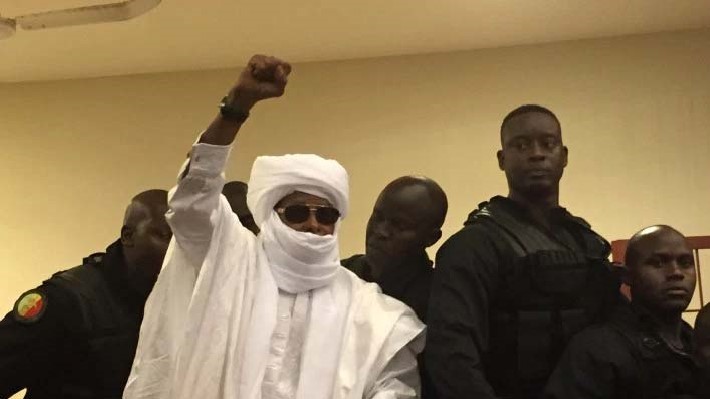
Islamist activists protested against the prosecution of their leaders on charges stemming from a war of independence 40 years ago. (NDTV)

Islamist activists protested against the prosecution of their leaders on charges stemming from a war of independence 40 years ago. (NDTV)

The International Crimes Tribunal in Bangladesh is an ongoing court mandated to investigate and prosecute individuals who committed atrocities during Bangladesh’s war of independence with Pakistan in 1971.

On February 5, 2013, the Tribunal sentenced Jamatt-e-Islami chief Abdul Kader Mullah to life for his alleged role in crimes committed during the 1971 independence war. Mullah was convicted on five of six counts, including murder and rape as crimes against humanity. The ruling sparked nearly two weeks of angry mass protests throughout Bangladesh resulting in parliament amending a law that will now allow the state to retroactively appeal against the life sentence and seek the death penalty.

Under the amended law, the government and others can now appeal against verdicts at the International Criminal Tribunal. The amendment also gives powers to the special tribunal to prosecute organizations or political parties who were allegedly involved in the war crimes. As eight of the accused are Jamaat party leaders, many within the party believe the change in the law is nothing but an attempt by the government to destroy it. However, the remaining two accused are members of Bangladesh Nationalist Party.

According to the BBC, the amended law puts the political rivals of the current Prime Minister on edge. As Prime Minister Sheikh Hasina made prosecuting war crimes a key goal of her government, critics have accused the government of pursuing political vendetta through the tribunal. Furthermore, as the majority of the accused are from Jamaat Party, if the party is indicted and then found guilty, the party can “be banned” from politics.

Another critique of this amended law and its effect on the tribunal is that it falls below the international standards required for a fair trial. According to Human Rights Watch, retroactive legislation violates fair trial standards because it undermines the work the Tribunal has done thus far. Although the government, including the Law Minister, stated that it had been drafted to ensure equal rights for both the government and the convicted, the law still grants extensive power, retroactively, to the prosecution to appeal decisions by the Tribunal.

The impact the amended law will have on the Bengali political climate or the effectiveness of the Tribunal is unclear. Even though government supporters believe that the amendment will positively affect the Tribunal and allow for fairer trials, many believe that the amendment will cause more hardship for the Tribunal long-term. For example, as the legitimacy hangs in the balance, Human Right Watch notes that some defense witnesses have decided not to go to court and that there is concern the judges will be afraid to hand out sentences other than the death penalty. Thus, as one commentator succinctly put, “instead of explaining to the public the separation of powers and the rule of law . . . the government has now directly intervened in the trial process.”

Victoria Kelley is a 3L and Alumni Editor on the Denver Journal of International Law and Politics


Posted in DJILP Staff, TVFA Posts, Victoria KelleyComments (1)

Critical Analysis: Conflict Between M23 Rebels and the Congolese Army in Goma – How Must the International Community Respond?

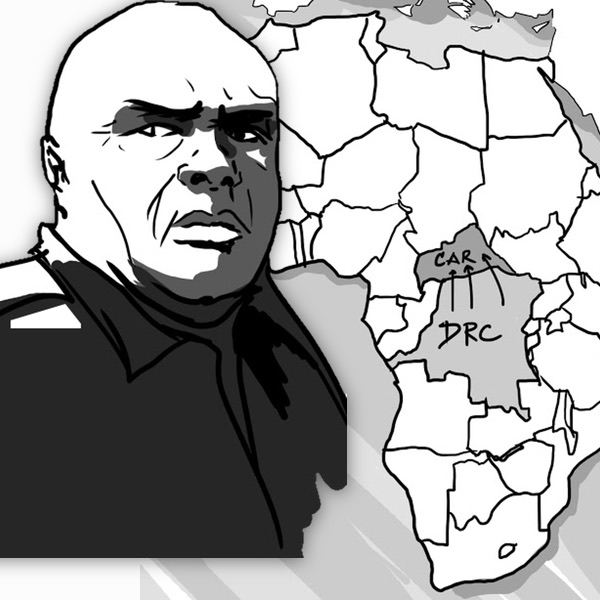
M23 rebels have claimed control of Goma in the eastern Democratic Republic of Congo. (DW)

M23 rebels have claimed control of Goma in the eastern Democratic Republic of Congo. (DW)

Congo’s M23 rebels, a group comprised mostly of Tutsi defectors from the Congolese army, launched an uprising in Congo in the spring of 2012.  They have since been advancing in eastern Congo against the weak Congolese army.  On November 20th, the rebels invaded Goma, an eastern border city that had been thought a safe haven for refugees prior to the invasion.  Although the rebels reportedly left the city ten days later under international pressure, it is widely believed they are still present, hiding in civilian clothing.  Now residents of Goma, including already displaced refugees, are caught between the rebels and Congolese army forces.  No shots have been fired over the last two weeks, but anticipation of violence looms.

The presence of both M23 and government soldiers in Goma places most city residents in a near impossible situation.  According to UNICEF, “more than 130,000 people have been displaced in and around Goma [since the 19th of November] and are currently living either with host families or in camps and spontaneous sites, or in public buildings.”  Many of these people arrived in Goma to flee M23, while others arrived fleeing the Congolese army.  Now, rebels and soldiers alike are stealing water and supplies donated for humanitarian needs, “many schools have been looted, destroyed or occupied by internally displaced persons or armed forces,” and there are gruesome reports of soldiers kidnapping and raping local women.

The stated purpose of M23 is not entirely clear. Some claim the rebels initially left the Congolese army because they were mistreated, not paid, and going hungry.  Others believe their revolt stemmed from Congolese President Joseph Kabila’s threat in January to submit M23’s leader, General Bosco Ntaganda, to the International Criminal Court (“ICC”) for alleged war crimes and crimes against humanity.  While three suspected warlords in Congo are currently being tried by the ICC, General Ntaganda remains a leader of M23 and outside ICC custody.  Now, M23 and the Congolese government are in negotiations, with the reported goal of developing a power-sharing deal over Goma. The deal remains uncertain, however, because “M23 insists on administrative control of Goma . . . [while the] Congolese government refuses.”  This has led many refugees to seek help from the international community.

International humanitarian aid has been coming to Congo, and Goma in particular, from international NGO’s and organizations.  “In November 2012, UNICEF and its NGO partners Norwegian Refugee Council and Solidarité International supplied over 20,000 displaced households with 15 tonnes of soap and with 10-litre jerry cans in an effort to reduce the spread of water-borne diseases, including cholera. The World Food Programme provided a three-day ration of food to each household.”  UNICEF is also mobilizing funds to allow refugee children the opportunity to continue their education.

As for the United Nations, UN forces patrol camps in Goma. However, the UN presence has thus far been ineffective; as evidenced by their failure to defend the city during the rebels’ November invasion. The United Nations did impose new sanctions on M23 leaders on December 31st that will freeze their assets and bar them from travel, but the effects of such sanctions have yet to be determined.

The events in Goma do not raise the question of whether the international community should act to protect the residents – the United Nations’ “responsibility to protect” initiative established in 2005 was partly set forth to prevent the type of war crimes and crimes against humanity that are currently taking place in the Congo.  Rather, the question is exactly what actions the international community, by way of the United Nations, can and should take. Thus far, military intervention has arguably been ineffective. The possibility of now allowing the people of Goma to be governed under power shared by these two factions seems irresponsible at best, and more likely reprehensible.

Frank Lawson is a 4LE and Board Member on the Denver Journal of International Law and Policy


Posted in DJILP Staff, Frank Lawson, TVFA Posts, UncategorizedComments (0)

ICC’s Sentence for Lubanga is a Shaky Conclusion to a Troubled Case

After ten years, the International Criminal Court issued its first verdict on March 14th, finding Congolese warlord Thomas Lubanga guilty of three child soldier related war crimes offenses: conscripting, enlisting, and using child soldiers. The trial phase of the case concluded this summer when the ICC sentence Lubanga to 14 years in July. The paltry sentence is a shaky conclusion to a case that has been troubled from the beginning.

Thomas Lubanga at the ICC

Controversy first appeared when the Prosecution team charged Lubanga only with the child soldier offenses. The prosecution surprisingly did not indict Lubanga with the substantive crimes committed by the child soldiers, namely thousands of instances of murder and rape. It is standard fare for tribunals to charge military commanders for the crimes committed by their subordinates, and so the Lubanga indictment seemed conspicuously narrow and unrepresentative of the mass crimes in the Ituri region of the Congo in which 60,000 were killed. And the indictment rankled many because of its failure to reflect the widespread commission of gender crimes.

The start of the trial saw the proceedings immediately halted over allegations of impropriety by the prosecution in its reliance on investigative “intermediaries.” It turns out the prosecution paid Congolese civilians to help them in the Congo. The “intermediaries” helped prosecutors identify and locate witnesses during its investigation, a practice which the court found in the trial judgment to be a misplaced delegation of responsibilities. The court indicated that several intermediaries may have facilitated false testimony. The prosecution did itself no favors by stubbornly defying direct court orders to disclose the names of intermediaries to the Lubanga defense team.

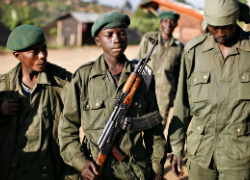
Congolese Child Soldiers
(Boston.com)

Despite this rough beginning, an appropriate judgment and sentence would have gone a long way toward erasing the memory of the ignominious start. But there would be no such luck. The court issue sentences of 12, 13, and 14 years for the “enlisting”, “conscripting”, and “using” counts respectively, a sentence that does not seem commensurate with Lubanga’s role in the mass slaughters or the enslavement and brutalizing of children. Adding insult to injury, the court ordered the sentences to be served concurrently and imposed an actual sentence of 14 years. The court had the option of ordering the sentences to be served consecutively — up to a 30 year maximum. Even better, it could have issued a life sentence.

The BBC reported at the time of the sentencing that Mike Davis, from the human rights organisation Global Witness, said that “the sentencing of Lubanga was an ‘important development’ but that it sounded like ‘a rather low sentence in relation to the crimes that he committed.’” Congolese government spokesman Lambert Mende “agreed that he should have been jailed for longer…” Mende diplomatically offered that the meager sentence was at least a “positive signal” for peace in the region.
In his sentence, Judge Adrian Fulford went out of his way to compliment Lubanga for his conduct and cooperation during the trial and critical of the prosecution. And Fulford lambasted the prosecution.

I am not defending the prosecution in Lubanga, but it should never be the case that a prosecutor’s conduct ever serves as mitigation in the sentence of a war criminal (just as the conduct of the defense attorney can never constitute an aggravating factor). Criminal sentences can only be issued on the merits of the case. Punitive measures against a prosecutor should be an entirely independent action.

Receiving credit for his six years of pre-trial detention, the 51 year old Lubanga has eight years remaining on his sentence – a term that could be significantly lessened for good behavior. It is a sweet deal for Lubanga, but the latest in a long string of bitter pills the Congolese have had to swallow.

At the very least, one hopes Lubanga’s deal is sweet enough to cause Sudanese President al Bashir to rethink his refusal to submit to the court’s jurisdiction.

Posted in David Akerson, TVFA PostsComments (0)

Recent Sturm College of Law Grad Credits War Crimes Class for Once-in-a-Lifetime Internship

L. Kate Campbell

My name is Kate Campbell.  I am a recent grad of the University of Denver Sturm College of Law and its International Legal Studies Program.  I’d love to take this opportunity to tell you about my current internship and how my participation in Professor David Akerson’s War Crimes Practicum led to this exciting opportunity.   On June 27, 2010, I began a six-month legal internship with the Registry branch of the Special Court for Sierra Leone (“SCSL”) in Freetown, Sierra Leone.  The SCSL was created to bring justice to victims of war crimes and crimes against humanity perpetrated in Sierra Leone in the last decade.  In March, the SCSL concluded its trial of Charles Taylor, the former President of Liberia, accused of organizing, planning, and sponsoring the atrocities in the region, and a judgment is expected in the next few months.  The Registry branch of the SCSL is responsible for supporting and coordinating all the various bodies of the court– Chambers, Prosecution and Defense – as well as for internal and external communications and victims’ assistance programs– work which continues to serve a critical role, even, and perhaps especially, during the judgment phase.  Additionally, the Registry is the body responsible for enacting legacy projects that communicate the work of the court to the people of Sierra Leone and preserve its story for posterity.

My current duties at the SCSL are twofold.  First, I assist the Registry in a general capacity.  In collaboration with the Registrar’s Legal Officer, I conduct legal research and analysis of issues relating to the functions of the Registry; review and draft internal policies and procedures; and contribute to the formulation of the Special Court’s completion strategy.  Second, I am introducing and training  members of the various court branches to a Casemap document created by DU SCOL Professor David Akerson and a team of University of Denver law students in the International Criminal Law Practicum, in hopes that various bodies of the court will soon be able to employ this valuable tool in their work.  Professor Akerson’s course – taught in the fall of 2010 and spring of 2011 – allowed students to engage in learning about international criminal law in an active manner via creation of an interactive database using CaseMap software.  Using the transcripts from the trial of Charles Taylor, former President of Liberia, accused of committing war crimes and crimes against humanity in Sierra Leone, we analyzed and condensed the transcript data into pertinent facts, highlighting all critical information, including names, dates, locations, etc, and then hyperlinked this information to both other relevant facts and the transcript itself.   The goal of this process was to make over two years of testimony easily accessible and searchable, thus potentially assisting staff working on Taylor’s case, in addition to the myriad individuals inside the court and in the general public who would find this information either useful in their work or of interest in telling their own story.  Because the work for the course was based on a current trial, and was intended for delivery to the Special Court, students were challenged to grapple with complexities of international law and the international criminal trial process in a new way.

Following the close of the spring semester, Professor Akerson presented our database to a group of SCSL staff in Freetown.  In response, they offered me a chance to come to Freetown to make further the software
and train them to use it to better facilitate the work of various branches during the judgment phase and for future use in appeals, as a tool for research, and as a part of outreach and legacy projects.  Additionally, as the Registry organizes all outreach, using CaseMap, I will help devise and implement strategies for using this interactive software to provide clear information about the trial to victims, students, and the general public. Such outreach might manifest as a resource at the Peace Museum, a legacy project currently being enacted at the SCSL, or through various civil societyorganizations that are working to better inform and heal the victims of the atrocities in the region.

I am extremely excited about the opportunity to continue this work.  I will be based in Freetown, for approximately six months, with the possibility of some travel about the country, as well as to The Hague.  I came to DU’slaw school in order to make a career of assisting the marginalized and oppressed, and while I was there, I discovered the excellent work that was being done by the ad hoc tribunals to address human rights violations of tremendous magnitude.  I am delighted
that, in exchange for providing me with this opportunity, I will be able to share the Casemap software as a resource for the court to find better and more efficient paths to create justice and to communicate its work to victims and to the global community.  In this capacity, I hope to develop new ways to use Professor David Akerson’s work to enable innovations in both court procedure and practice and in victim outreach and education.

Originally posted in www.denverlawplan.com

Posted in L. Kate Campbell, TVFA PostsComments (3)


University of Denver Sturm College of Law

@View_From_Above

Resources
Visit the DJILP Newsroom

Posts by Date

June 2013
M T W T F S S
« May    
 12
3456789
10111213141516
17181920212223
24252627282930

Translator

EnglishItalianKoreanChinese (Simplified)Chinese (Traditional)PortugueseGermanFrenchSpanishJapaneseArabicRussianGreekDutchBulgarianCzechCroatianDanishFinnishPolishSwedishNorwegianHebrewSerbianSlovakThaiTurkishHungarianRomanian